
SATE Hydrogen Roadmap
Funder: Department for Transport / Innovate UK
Competition: Zero Emission Flight Demonstrator Round 1
Project Start: 1st September 2026
Project End: 31st January 2028
Project Description:
Hydrogen propulsion offers a realistic pathway to cleaner regional aviation, particularly where the distances involved are too great for battery-electric aircraft alone. The Highlands & Islands is well placed for early adoption, with strong renewable energy resources and emerging green hydrogen production capacity.
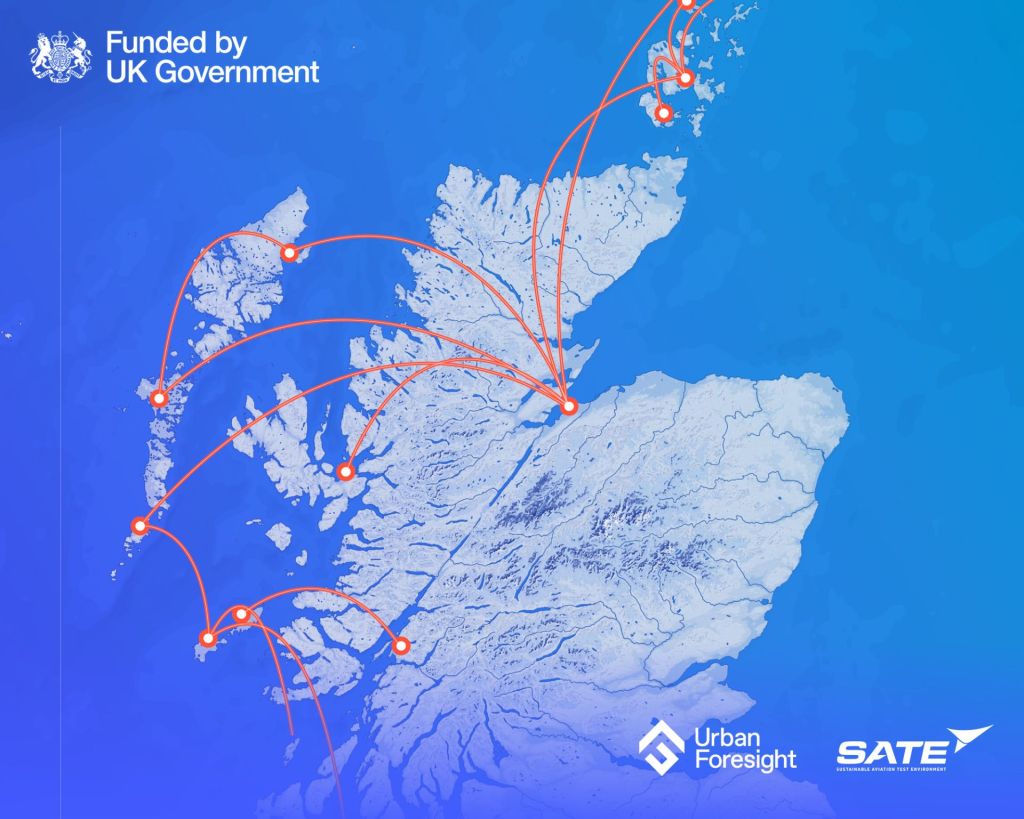
Led by Urban Foresight, the project brings together The Highlands and Islands Transport Partnership (HITRANS), EA Maven, Cormorant Seaplanes, and Hybrid Air Vehicles. Together, the consortium will identify the most commercially viable routes for hydrogen aircraft, assess the infrastructure needed at regional airports, and produce a phased roadmap for deployment.
The study will deliver a hydrogen aviation roadmap, a prioritised list of routes, demonstrator recommendations, and airport infrastructure plans. These outputs will help government, airport operators, and airlines make informed decisions about where and how to invest in hydrogen aviation.
The project builds on five years of innovation through the Sustainable Aviation Test Environment (SATE) programme, which has established the Highlands & Islands as the UK’s leading testbed for low-carbon aviation. The roadmap will provide the next step – translating those insights into a clear pathway from demonstration to commercial deployment, with potential for replication across other remote regions of the UK.
Project SEAN (Scottish Electric Aviation Network)
Funder: Department for Transport / Innovate UK
Competition: Zero Emission Flight Demonstrator Round 1
Project Start: 1st September 2026
Project End: 30th November 2027
Project Description:
Zero emission aviation is rapidly progressing toward commercial readiness, with electric aircraft expected to enter service within the next few years. As pre-production aircraft become available, the UK, particularly its more remote regions, has a vital opportunity to lead in proving this technology, supporting connectivity while contributing to the national goal of reaching net zero by 2050.
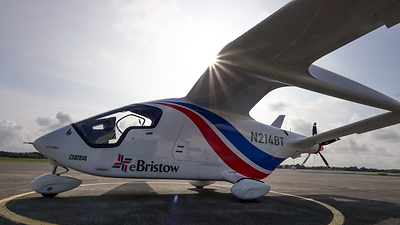
This project brings together a world-leading consortium to deliver a structured, real-world demonstration of zero‑ emission regional flight. The consortium includes Bristow Helicopters Ltd, BETA Technologies (manufacturer of the all-electric‑ Alia CX300 eCTOL aircraft), EA Maven, Skyports, Highland and Islands Airports Ltd (HIAL), and The Highlands and Islands Transport Partnership (HITRANS), the statutory transport partnership for the Highlands and Islands and the owners of the SATE initiative.
Building on experience from initiatives such as Norway’s Test Arena for Zero and Low Emission Aviation, the UKRI OXCAM project, and the SATE project, the Consortium will develop an evidence-based hub-and-spoke network using Inverness Airport as a hub connecting to selected Scottish regional airports, including Wick. A data‑driven demand model will identify real operator demand across a variety of cargo, medical, and passenger routes, ensuring the network is appropriately sized and informing assessments of electricity requirements at each operating location. Supporters like the Royal Mail will share insights to their network, delivery commitments and the reliability and sustainability challenges to meet those commitments, and this project will aim to identify solutions.
Recognising the importance of early public engagement, HITRANS will lead community outreach to communicate the benefits of electric aviation and articulate its positive socioeconomic impact for local audiences. The project will also address the practical challenges of integrating electric aircraft into regional airports. This includes developing a standardised airport Concept of Operations (CONOPS), assessing infrastructure requirements, and installing fast charging capability at Inverness Airport, alongside a study of alternative charging solutions for grid constrained locations. The programme will conduct in a three-month series of live demonstration flights using the BETA Alia CX300 aircraft. Led by Bristow, this operational phase will cover flight planning, pilot qualification, operational risk assessment and regulatory alignment, ensuring the demonstrator reflects real-world operating conditions. Required approvals will be sought from the UK Civil Aviation Authority (CAA), aligned with US Federal Aviation Administration (FAA) airworthiness certification, enabling operations under both visual and instrument flight rules.
The project will conclude with a comprehensive report assessing ecosystem readiness and providing evidence-based recommendations to support future commercial zero emission aviation operations in Scotland.

