
£190,000 Zero Emission Flight award will fund the UK’s first region-specific roadmap for hydrogen aviation, building on five years of Sustainable Aviation Test Environment (SATE) innovation in the Highlands and Islands
A consortium led by Urban Foresight, working with the Highlands and Islands Transport Partnership (HITRANS), EA Maven, Cormorant Seaplanes and Hybrid Air Vehicles, has been awarded £190,081 through Innovate UK’s Zero Emission Flight (ZEF) Demonstrator competition to deliver the SATE Hydrogen Roadmap. The 18-month feasibility study, with a total value of £249,944, begins in August 2026 and will set out how and where hydrogen-powered aircraft could first enter service on regional routes across the Highlands and Islands.
The region’s island and remote communities rely on air services as a lifeline for passenger travel, NHS logistics, seafood exports, and business connectivity. Those services face rising costs, ageing fleets and the need to align with Scotland’s ambition to decarbonise regional aviation by 2040. With abundant wind, tidal and wave resources and an emerging green hydrogen production capacity, the Highlands and Islands is one of the few places in the UK where hydrogen supply and aviation demand can be developed side by side.
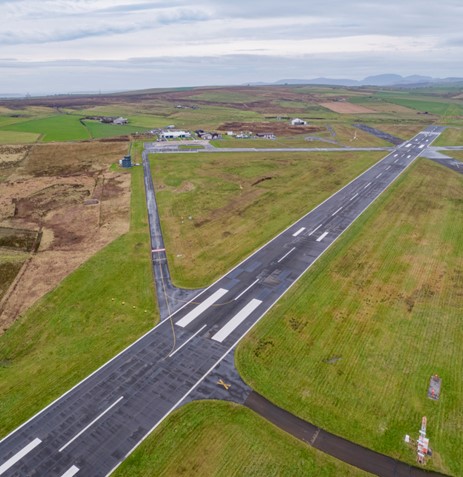
The project will produce an integrated evidence base for government, airports, airlines, and local authorities. Its outputs include a hydrogen aviation roadmap for the Highlands and Islands, a prioritised shortlist of commercially viable routes, demonstrator route recommendations, airport hydrogen refuelling infrastructure plans phased from gaseous to liquid hydrogen, and quantified commercial, environmental and socioeconomic benefits.
Each partner brings a distinct capability. Urban Foresight leads the project and will author the roadmap, building on its role as Strategy Director for the SATE Regional Aviation Strategy. HITRANS will lead exploitation, stakeholder engagement and communications, and will co-own the roadmap outputs, building on experience leading the SATE project. EA Maven will carry out demand, schedule and revenue modelling through its AeroTesseract platform to identify the most promising routes. Cormorant Seaplanes, with unfunded adviser Hybrid Air Vehicles, will provide platform-level insight to ensure assumptions on aircraft performance, payload and route patterns reflect real-world operations.
The award builds on five years of public investment through the SATE programme, which has established the Highlands and Islands as the UK’s leading testbed for low-carbon aviation. Where SATE has demonstrated the technology, the roadmap is designed to close the loop to market adoption, giving investors and policy makers the commercial and infrastructure evidence needed to move from trials to scheduled services. The approach is intended to be replicable across other remote and rural regions of the UK.
Ranald Robertson, Partnership Director at HITRANS, said:
“Air links are not a luxury in the Highlands and Islands, they are how many patients reach hospital, how pupils get to school and how medicines are transported to our islands and high value seafood reaches market. This funding lets us answer the practical questions that stand between hydrogen flight and our communities: which routes make sense first, what our airports need to be ready, and in what order that investment should happen. Building on everything SATE has achieved, it moves us from proving the technology to planning its arrival.”

