

Standardisation has become, well, standard for the aviation industry. It reduces costs, makes processes and integration easier, supports safety and training, and streamlines regulation. We are all used to going to the airport and seeing a familiar roll call of planes on the tarmac. But as we look to the future, innovative hybrid aircraft like our Airlander 10 will bring exciting new possibilities to that landscape – offering fresh capabilities while complementing the trusted standards already in place.
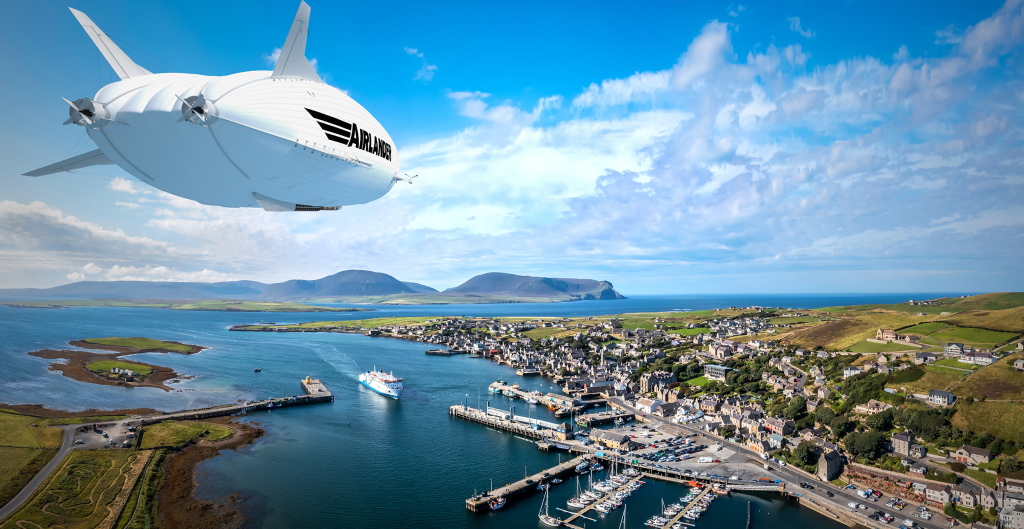
Airlander is a hybrid aircraft, utilising a combination of proven aerospace technologies such as a helium-filled hull, from airships, and aerodynamic lift, akin to traditional aircraft. Capable of carrying a payload of up to 10 tonnes, it is fuel efficient and has the potential for multi-day endurance.
With the Airlander 10 we are creating a new transport category. And the fact is, if we want to achieve a zero emission aviation sector in the UK we will need to create even more. Diversity in our skies must become the standard to successfully deliver the sector’s carbon reduction ambitions.
It is not simply a case of adapting our existing fleets to use sustainable aviation fuel. Just as not all cars are suitable to evolve into hybrid and electric vehicles, the same goes for aircraft. Taking into account the fact that passenger journeys alone are forecast to double in the next 20 years, we need more radical and innovative solutions to achieve decarbonisation.
When it comes to sustainable aviation, there is no one size fits all solution. Different types of aircraft will specialise in their own areas of strength.
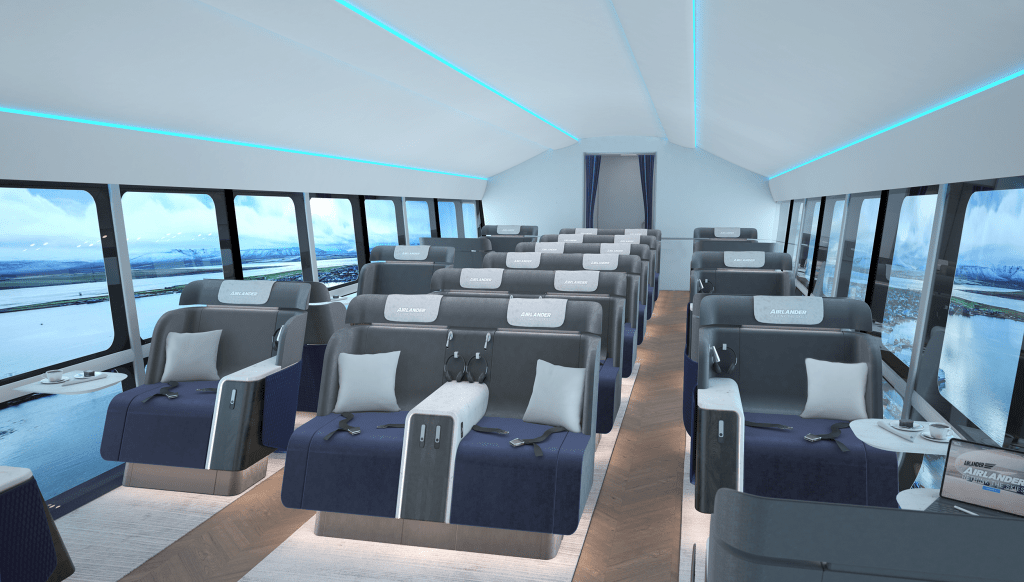
The Airlander 10 will be able to carry 100+ passengers over short, regional routes. Its multi-day cruise capability could open up 16-20 passenger luxury experiential travel experiences. It is well suited to communications and surveillance, logistics, and delivery of large and outsize freight. More widely in the sustainable aviation landscape, drones have excellent potential for short turnaround, lightweight cargo. Electric vertical take-off and landing (eVTOL) aircraft are ideal for short-range urban air mobility applications – think deliveries and air taxis.
This diversity will also create important new opportunities for smaller, regional airports. With a broad cross section of aircraft categories, there will be more scope for different types of supporting infrastructure.

The Airlander 10 is designed for omni-direction take off and landing, and can operate from unprepared surfaces, so no need for long runways. There will be few challenges with airfield compatibility so it can fly from locations large and small. Similarly eVTOL vehicles do not need large runway infrastructure.
Think of the opportunities this offers to open up more remote and harder to reach communities, whether for business and leisure travel or logistical services like parcel delivery, supplies into shops and other resources. It could help unblock bottlenecks from congested logistics routes and create new options, for example, direct from farm to port.
Sustainable aviation has the power to connect us like never before. One day it will be the norm to see a range of aircraft, large and small, in our skies, and we hope the Airlander will be one of them.
George Land, Hybrid Air Vehicles
 sate.scot