
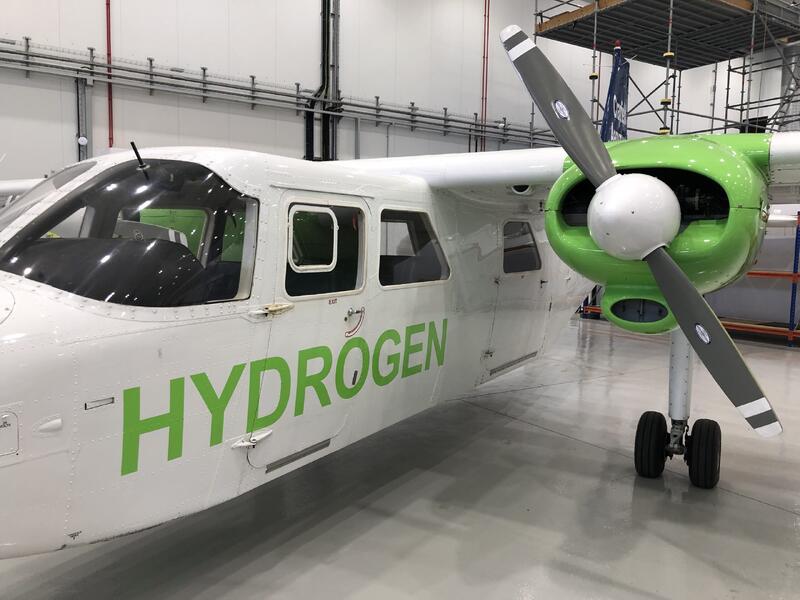
An Orkney-based aviation project will work with the national aviation regulator to help unlock widespread use of hydrogen fuel and propulsion.
The Sustainable Aviation Test Environment (SATE), a multi-organisation collaboration led by HITRANS, has been selected as one of 13 projects under the latest phase of the Civil Aviation Authority’s Hydrogen Sandbox, which will create a better understanding of hydrogen technologies, shape future regulation, and ensure that they are safely adopted into the aerospace sector.
Successful trials could help to pave the way for lower fares, higher availability of flights, and a lower carbon footprint when compared to aircraft powered by jet fuel, with some estimates suggesting that hydrogen has the potential to reduce aviation’s CO2 emissions by up to 50%.
SATE’s initial work will focus on implementing changes to infrastructure at Kirkwall Airport’s aerodrome that could be rolled out nationwide in the future, paving the way for hydrogen including safe storage and refuelling. For the Highlands and Islands, this could mean more widespread operations using hydrogen fuelled aircraft.
SATE will lead a consortium of key organisations including HITRANS, Cranfield Aerospace, HIAL, EMEC, Loganair, Orkney Islands Council, and AGS Airports to test hydrogen technologies with a view to enabling the use of hydrogen aircraft for commercial use at remote and rural airports.
The consortium will tap into its considerable knowledge base from previous SATE trials of BVLOS and eVTOL aircraft, drawing together all the key operational and technological capability and experience needed to deliver the first commercial service of a hydrogen fuelled aircraft.
Tim Johnson, director of communications, strategy and policy at the UK Civil Aviation Authority, said: “These trials keep the UK on course to be a world leader in hydrogen propulsion.
“We are working with some of the most innovative companies and minds to better understand this technology and how it might be introduced safely in the aerospace sector. In doing so, it offers the potential to enable a more sustainable aerospace system and support UK economic growth.”
Jayne Golding, SATE manager, HITRANS, said: “Hydrogen fuel offers the aviation industry a significant opportunity to operate more sustainably. Our work in the Highlands & Islands will feed into the wider CAA initiative to help us understand how we can roll out a hydrogen fuel infrastructure on a commercial scale which will be a game changer for reducing air transport emissions.”
 sate.scot