
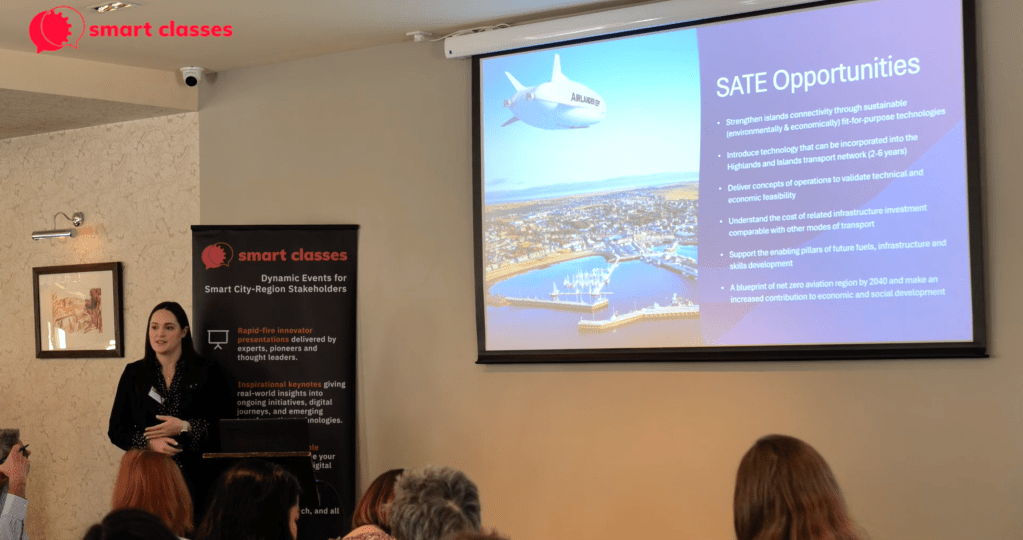
As we begin the new year in earnest, it’s an exciting time for SATE, as we continue our pursuit of sustainable aviation technologies and improved regional connectivity. Our partners enter 2025 with strong ambitions for the next twelve months, building on the momentum of a successful run of trials, conferences and wide-ranging stakeholder engagements. With the Scottish Government publishing its aviation statement last year, we are excited to contribute to the realisation of a more well-connected, efficient and sustainable Scotland.
Commercial Trials
Real use cases and the development of viable commercialisation solutions are a key focus for partner activities in 2025. Windracers’ beyond visual line of sight (BVLOS) trials in Orkney last year marked a big step towards a more well-connected and efficient aviation industry as we look to integrate unmanned aviation systems into regional airspaces. Upcoming Windracers trials in Shetland will bring us one step closer to launching heavy lift drones as a commercial service in our region. ARC Aerosystems will continue to focus their efforts on developing their technology, trialling visual line of sight (VLOS) operations at Wick, with previous trials providing a solid foundation to build upon in 2025. These trials illustrate expansive possibilities for the aviation industry of the future, and we will continue to work with Cranfield Aerospace Solutions and supporting partners towards the deployment of hydrogen aircraft in the Highlands & Islands in the coming years.
Aviation and Collaboration
Key to this continued progress is our ongoing partnership with the Civil Aviation Authority (CAA). Our collaboration on the integration sandbox involves essential work which will ensure the safe integration of drones flying beyond visual line of sight (BVLOS) into UK airspace. Collaboration across the public and private sectors, as well as academia, will remain a cornerstone of our activity this year, as we aim to introduce new geographic regions to our trials. This will illustrate the benefits of sustainable aviation technologies across both the regional and national level.
Last year’s unmanned drone tests between the islands of Eday and Westray are a blueprint ready to be implemented in other rural communities, with the potential to improve access to essential services as well as valuable local employment opportunities. As these services are implemented across the country, their economic benefits may even support in the realisation of new markets, including health and leisure services.
Tackling Challenges
We are conscious of the need for continued assessment throughout all these advances. Focused on impactful long-term outcomes, we will thoroughly assess the overall exploitation impact of SATE to ensure we achieve our objectives for Scotland and the UK. To realise a brighter future for the aviation industry, continued funding is required to advance partner technologies and enable full commercial deployment. On a regulatory level, policies enacted must keep pace with these ever-advancing technologies. By meeting these challenges head on, we’ll be able to demonstrate the significant benefits that sustainable aviation holds: whether it’s improving connectivity, supporting remote communities, or delivering a reduction in emissions that will help to ensure the future viability of the industry, and our planet.
 sate.scot