
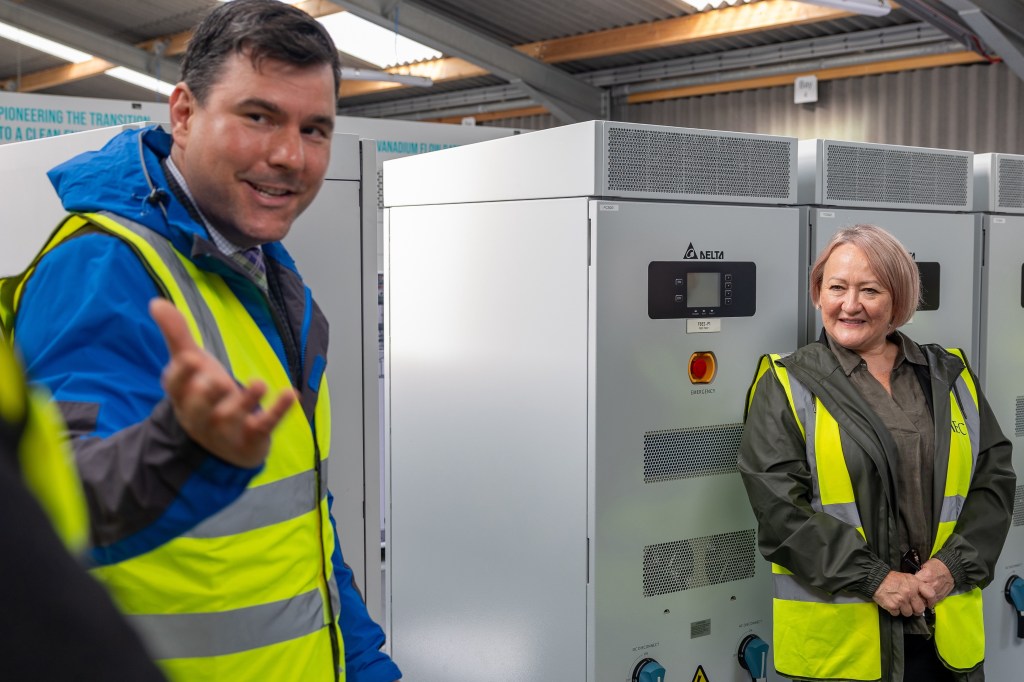
Tackling the climate crisis, accelerating progress towards net zero and powering the UK with clean homegrown energy are current priorities for the Department of Energy Security and Net Zero.
Visiting SATE partner, EMEC’s, pioneering clean energy test and demonstration facilities, Minister McCarthy learnt about the important role of emerging technologies such as tidal power, wave energy, floating wind and green hydrogen in the future energy mix and how these solutions can contribute towards making Britain a clean energy superpower.
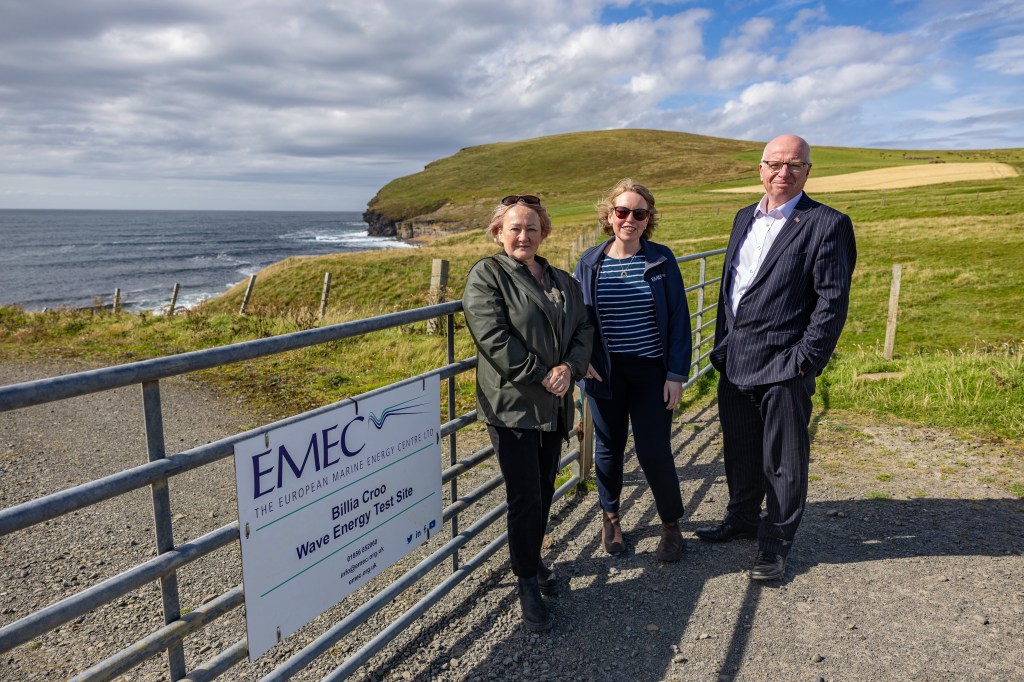
EMEC’s Managing Director with Climate Minister Kerry McCarthy
Tidal energy, for instance, is a predictable renewable source of power with the potential to provide 11% of the UK’s current electricity demand and replace the role that gas currently plays in the energy system.
Climate Minister Kerry McCarthy said: “It is inspiring to see first-hand the innovative technologies being developed at EMEC, which are crucial to our mission to achieving clean power by 2030. The advancements in tidal power, wave energy and green hydrogen exemplify the kind of homegrown solutions that will boost our energy independence, create jobs and tackle climate change.”
The Minister also visited EMEC’s onshore facilities on the island of Eday where the power generated by Orbital feeds into the national grid. Here she was given insight to a planned alternative offtake project to create synthetic fuel from hydrogen while exploring EMEC’s green hydrogen and battery storage R&D site.
Whilst in Eday, SATE Business Manager, Lukas Princ, talked to the Minister about the SATE programme and was introduced to Windracers ULTRA(tm), a self-flying cargo aircraft designed and manufactured in the UK, that is now being utilised to trial a regular air delivery service between the islands of Eday and Westray.

Lukas Princ finished: “It was great to talk to the Minister about SATE and to have the Windracers team here during the planned trials, to demonstrate first hand what the programme is doing and the kind of positive impact sustainable regional aviation can have.”
 sate.scot