
As Chief Strategy Officer at Cranfield Aerospace Solutions (CAeS), I spend a lot of my time navigating the complex world of sustainable aviation and the central role hydrogen plays amidst a landscape of alternative fuel solutions. In this blog post, I’ll take you through the merits of hydrogen, the technology that we’re developing and the pivotal role that Scotland is poised to play as an epi-centre for zero-emissions flight development.
Why hydrogen?
When it comes to alternative aviation fuels, there is no silver bullet. The aviation industry, like so many others, has depended for decades on kerosene which unfortunately is an extremely versatile fuel and therefore very difficult to replace. However, it’s clear that its days are numbered.
As an industry, aviation must decarbonise but when it comes to alternative fuels, there is no easy answer. There is also no viable path to true zero flight that doesn’t involve hydrogen.
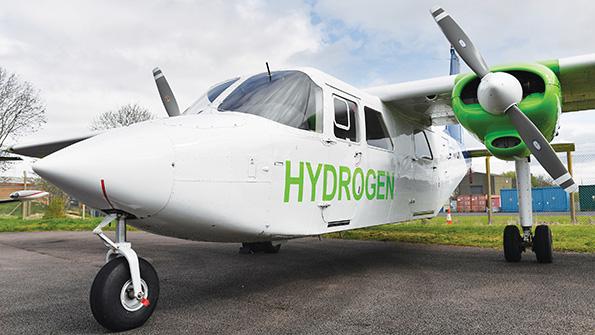
When used in fuel cells that convert gaseous hydrogen into electricity, hydrogen enables zero-emission propulsion at the point of use, avoiding not only CO2 but also contaminants such as soot, nitrogen oxides, and particulates that cause air pollution; and with an energy density per kg that is three times that of kerosene, the potential for aviation is compelling…
…but realising that potential is not easy.
The technology
The fuel itself may contain three times the energy but unlike kerosene that is liquid at room temperature, hydrogen has to be either stored at high pressure as a gas (involving very heavy tanks) or at cryogenic temperatures as a liquid (involving many technical challenges including avoiding it boiling off in flight or when stored). This adds weight, cost and complexity that needs to be minimised in the development of new propulsion systems, storage technology & aircraft if the technology is to fulfil its potential.
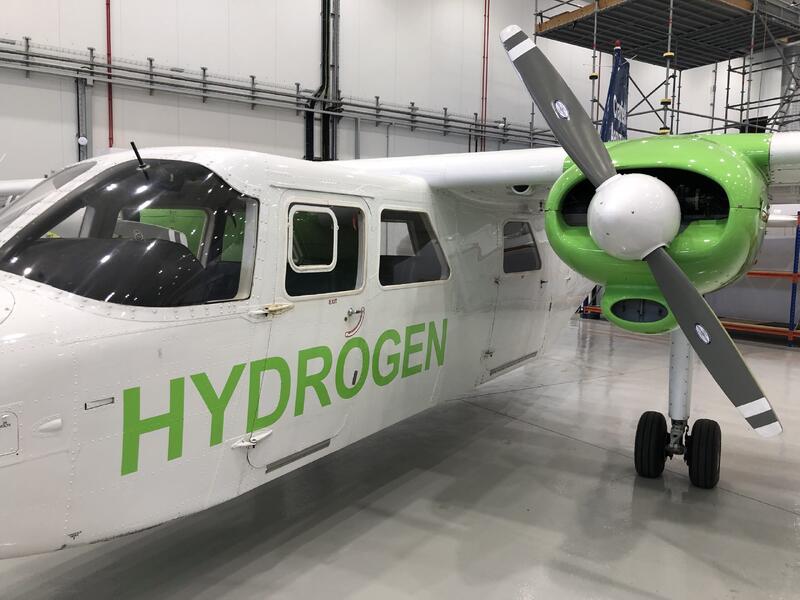
At CAeS, we’re developing a gaseous hydrogen fuel cell powertrain that is scalable and adaptable to multiple platforms. We have recently announced a major milestone whereby we have succeeded in packaging our entire “engine” (fuel cell system & electric motor) into the nacelle of our Islander aircraft (an existing 9-seat aircraft that we intend to be our launch platform). It is a system that will deliver 110% of the power of the engine that it’s replacing, with no battery and with a thermal management system rated to extract all the heat from the system; a significant step towards certification and commercialisation of the company’s zero-emissions technology. That is no mean feat and the blood, sweat and tears that we have expended to achieve it is testament to our incredibly talented team. It also underlines the challenge the industry faces but that innovation and determination will find a way to meet that challenge.
But it’s not just the technology that needs to be developed.
Currently there are no standards or regulations available to guide airports and operators of hydrogen aircraft how to safely store and handle hydrogen or indeed how to refuel aircraft to the same stringent safety standards that exist for the use of kerosene. And as gaseous hydrogen behaves so very differently to kerosene, it is impractical to simply transpose identical processes and procedures. We need to gather experts from across the airport, hydrogen and regulatory environments, get our heads together and figure out how to build on current knowledge of hydrogen, which has been used for decades in industry, to provide aviation with a workable and most importantly, safe solution.
And that’s where SATE comes in.
SATE
The Sustainable Aviation Test Environment (SATE) is a great example of how a small group of committed people can make a real difference. Based in Kirkwall, the project was launched in November 2020 and is pioneering the adoption of sustainable aviation technology by creating an environment where key stakeholders can collaborate, design ecosystems and trial sustainable aviation technology.
CAeS’s involvement with SATE is to lead a collaborative effort to address the hazards, risks, and challenges associated with using gaseous hydrogen as an aviation fuel, particularly focussed on the airport environment and the refuelling process. Together with our partners, we aim to shed light on both the technological advancements and the regulatory standards necessary for the safe refuelling of aircraft using gaseous hydrogen, in turn supporting the CAA’s understanding of the use of hydrogen fuels and how this may influence future regulation and policy.
Scottish outlook
It is important to note however that although SATE may be located physically on an island, it is far from an island in the context of enabling the next revolution in aviation. Scotland is fast becoming a crucial epicentre for the development of zero-emissions and low carbon flight, especially (not merely including) its island communities.
Firstly, the Highlands & Islands, which make up around 50% of the geographic area of Scotland, have the characteristics perfectly suited to the initial technology offerings of zero-emissions flight – short hop routes, small aircraft and ecologically sensitive environments with a need for connectivity.
Secondly, Scotland is clearly setting out its stall as a country to become a major green hydrogen producer, user and exporter, with a target of producing 5GW of green and low carbon hydrogen by 2030, supported by a potential pipeline of offshore wind projects that could produce up to 40GW worth of renewable electricity. Coupled with a series of Regional Hydrogen Hubs that will bring together the entire hydrogen value chain from production to end-use; including the hub at Orkney that “has a strong claim to be the first place in the world to have exported renewable hydrogen” according to Scottish Development International’s white paper: “Hydrogen: How Scotland is harnessing the potential of clean energy”.
Therefore, it is no co-incidence that we recently announced a Memorandum of Understanding with Scottish airline Loganair, through which we will work together with the intention of bringing zero-emissions passenger flight to Scotland by 2027.
With our commitment to innovation and collaboration, Cranfield Aerospace Solutions stands at the forefront of this transformative journey. Together with our partners in SATE,we’re poised to shape a cleaner, greener future for aviation…
…one hydrogen-powered flight at a time.
 sate.scot